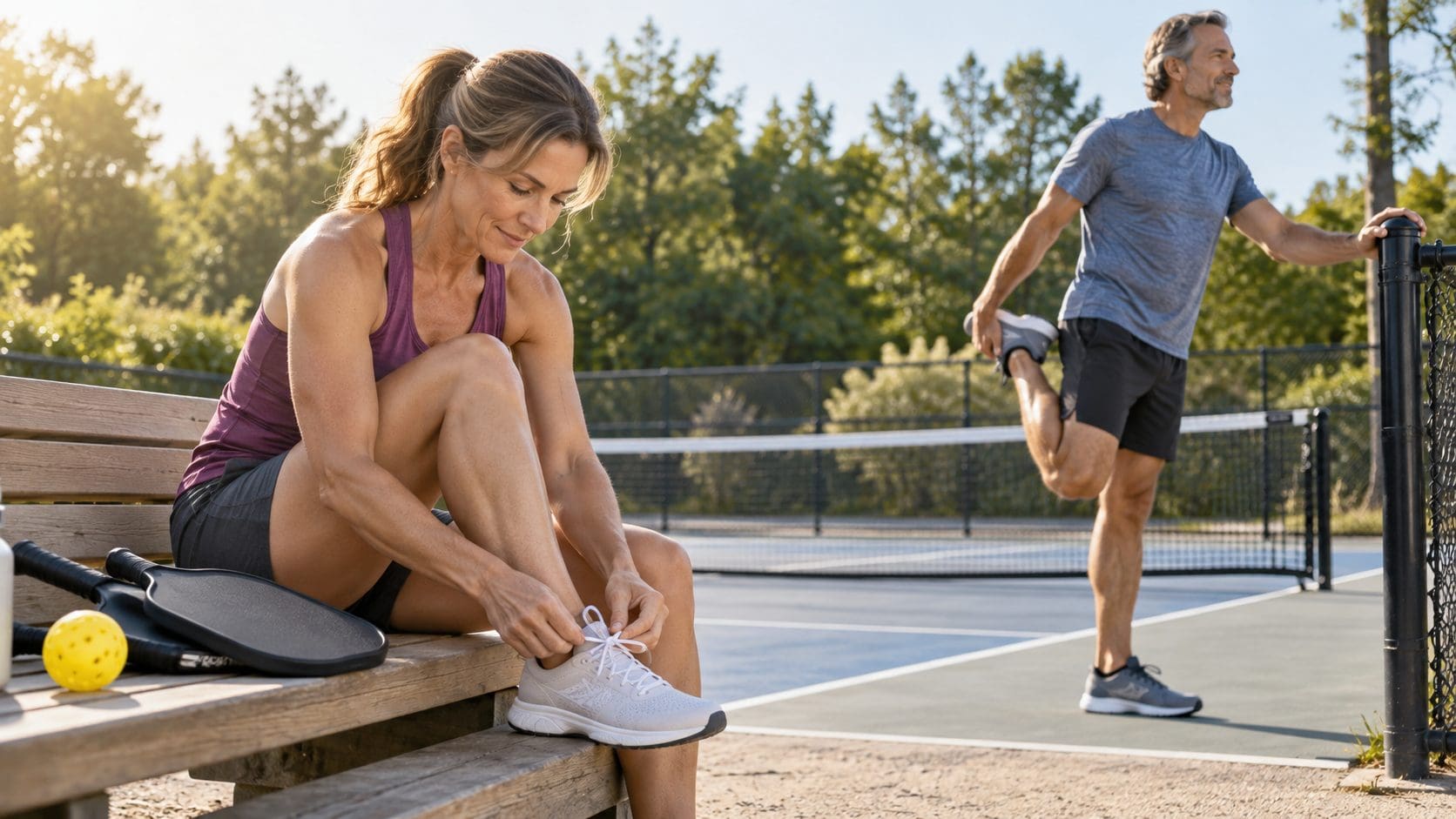
Pickleball is accessible, social and easy to learn, but the sport places real physical demands on the body. Quick lateral movements, sudden stops, repeated paddle swings and reaching for low or wide shots can place stress on muscles, tendons and joints.
As participation has increased, sports-medicine specialists have also documented a broad range of pickleball injuries, from overuse conditions to sprains, strains and fall-related injuries. A nationwide study of 1,758 pickleball players found that the knee, lower extremities, shoulder, back and elbow were among the most commonly affected areas.
Understanding the most common injuries—and the factors that contribute to them—can help players take practical steps to reduce their risk.
What Are the Most Common Pickleball Injuries?
Pickleball injuries generally fall into two categories: acute injuries that happen suddenly and overuse injuries that develop gradually.
Common problems include:
- Shoulder strains and tendon irritation
- Tennis or pickleball elbow
- Fall-related injuries and fractures
Sports-medicine clinicians note that repetitive motion frequently contributes to shoulder, elbow and wrist problems, while rapid changes in direction can increase stress on the knees, ankles and lower legs.
Knee and Ankle Injuries
Pickleball requires players to accelerate, stop and change direction repeatedly, often within a relatively small playing area.
Those movements can place substantial demands on the lower body.
Ankle sprains may occur when a player changes direction quickly, lands awkwardly or loses balance while reaching for a ball. Knee pain may develop gradually from repetitive loading or occur suddenly during twisting or lateral movement.
Recent research has identified the knee as one of the most frequently reported areas of injury among pickleball players.
Appropriate court footwear is one of the simplest ways to support lower-body movement. Court shoes are designed for lateral stability and traction, characteristics that ordinary running shoes may not provide to the same degree. Sports-medicine experts also recommend gradually increasing playing time rather than moving immediately into long or frequent sessions.
Pickleball Elbow
Lateral elbow pain is commonly associated with repetitive racquet and paddle sports.
Often referred to as tennis elbow—or informally as pickleball elbow—the condition involves irritation around the tendons on the outside of the elbow. Repetitive gripping and swinging can contribute to symptoms, particularly when playing frequency increases faster than the body can adapt.
Paddle setup may also influence how much effort is required from the hand and forearm.
Grip circumference, paddle balance and swing weight all affect how equipment feels during repeated swings. Pro-Line’s guide to what to look for in a pickleball paddle explains how grip size and swing weight can influence comfort, maneuverability and playability.
Equipment cannot prevent every injury, but choosing a paddle that fits the player’s hand and playing style can help avoid unnecessary fatigue or excessive gripping.
Shoulder Injuries
Serving, overheads and repeated forehand or backhand swings all require shoulder movement.
Over time, repetitive loading can contribute to conditions such as rotator cuff irritation, shoulder impingement and tendon pain. Sudden injuries can also occur during forceful movements or falls.
Players can reduce unnecessary shoulder stress by emphasizing efficient mechanics rather than trying to generate all of their power from the arm.
Good technique typically distributes movement across the legs, hips, trunk and shoulder instead of relying on one joint to produce the entire swing.
Achilles Tendon and Calf Injuries
The explosive first step required to reach a short ball can place significant stress on the calf and Achilles tendon.
This can be especially important for players returning to sports after a long period of lower activity.
Medical guidance consistently emphasizes warming up before playing. A useful warm-up may include light movement, dynamic stretching, shoulder movements and gradual court movement before full-speed play begins.
Starting a match cold and immediately performing explosive movements may place greater stress on tissues that have not yet been prepared for activity.
Falls and Wrist Injuries
Falls are another important source of pickleball injuries.
Players sometimes move backward for a lob, reach outside their normal base of support or cross their feet while attempting to recover position. A fall can lead to wrist, shoulder or other injuries, particularly when the player instinctively extends an arm to break the fall.
Good court movement can help reduce this risk.
Whenever possible, players should maintain balance, use controlled footwork and avoid rapidly backpedaling for balls that are already behind them.
How Can Players Reduce Their Risk of Pickleball Injuries?
No prevention strategy can eliminate injury risk completely, but several habits can help reduce unnecessary stress on the body.
Warm Up Before Playing
Begin with several minutes of light activity and dynamic movement before playing at full speed.
Increase Playing Time Gradually
Players who are new to pickleball or returning after time away should allow their conditioning to develop progressively.
Build Strength and Balance
Strengthening the legs, core and upper body can help support the repetitive movements required during play. Balance training may also improve court movement and stability.
Use Appropriate Footwear
Choose shoes designed for court movement and lateral support rather than footwear intended primarily for forward running.
Use Equipment That Fits Properly
Paddle grip, weight and balance should suit the player. Pro-Line paddles also feature adjustable balance options designed to let players modify how the paddle feels in the hand. Players can review Pro-Line product instructions for information about grip replacement and BalanceLock weight adjustments.
Allow Time for Recovery
Playing more frequently is not always better. Research has associated higher weekly playing frequency with increased injury risk, making recovery an important part of regular participation.
Pay Attention to Pain Before It Becomes a Larger Problem
Muscle fatigue after activity is different from sharp, persistent or worsening pain.
Continuing to play through significant pain can make some injuries worse. Current sports-medicine guidance recommends stopping activity when sharp or persistent pain develops and seeking medical evaluation when symptoms are severe, continue for several days or interfere with normal movement.
Pickleball should support long-term activity, not require players to ignore warning signs in order to stay on the court.
Play Longer by Preparing Smarter
Reducing the risk of pickleball injuries comes down to preparation, conditioning, technique, recovery and appropriate equipment.
A proper warm-up, gradual increases in playing time, supportive footwear and equipment suited to the player can all contribute to a more sustainable approach to the sport.
Ready to upgrade your equipment? Shop Pro-Line Paddles and explore paddles designed with performance, balance, control and customization in mind.