For the best experience this application needs your location. Please allow in your browser.

Understanding Your DUPR Pickleball Rating and What It Says About Your Game

You finish a match, check your DUPR and notice the number has moved. It’s tempting to treat that change as a verdict on your game, especially when you’ve been working hard to improve.

Your DUPR pickleball rating offers useful insight into your competitive performance. It helps players find suitable competition and gives clubs and tournament organizers a common way to compare skill levels. Understanding what goes into that number makes it easier to use it productively while keeping your progress in perspective.

How DUPR Measures Competitive Performance

DUPR stands for Dynamic Universal Pickleball Rating. It gives players a numerical rating based on competitive results, providing a shared reference point that is more specific than calling yourself “intermediate” or “advanced.”

DUPR evaluates performance against expectations based on the ratings of the players on the court. Match recency, volume and source also influence the calculation. Verified club and tournament results carry more weight than self-posted matches, and recent results help the system reflect your current level.

That means a rating change needs context. Winning feels great, but rating movement also depends on how your performance compares with the expected result. Looking at your results over time gives you a more useful perspective than reacting to one match.

The Value of a More Complete Match History

A rating built on a handful of matches has less information behind it than one supported by regular competitive play. If your recorded results are limited or outdated, the number may provide an incomplete picture of where your game stands today.

DUPR’s Reliability Score helps put that history into context. Displayed alongside your rating, it reflects how reliably the available data represents your current level. Match volume, the source of results and the variety of partners and opponents contribute to that assessment.

For players, the practical takeaway is straightforward: keep your record current and accurate. Competing with different players can also give you useful experience beyond your usual group. You’ll encounter unfamiliar patterns, different speeds and strategies that challenge parts of your game your regular opponents may rarely test.

Similar Ratings Can Represent Different Playing Styles

Two players with similar ratings can create very different challenges. One might attack with hard drives and quick hands. Another might slow the game down, absorb pace and patiently wait for an opening.

Both approaches can produce strong results. The rating helps describe the general level of competition, but it doesn’t explain exactly how someone earns their points.

That matters when you step onto the court. Assuming you already understand an opponent because you’ve seen their rating can lead to poor decisions. Watch their positioning, shot selection and response to pressure. Those observations tell you how to adjust during the match.

Partner chemistry adds another layer. Communication and complementary strengths can influence how comfortably you play together. Learning to adapt to different partners builds skills that a single number cannot fully describe.

Recognizing Improvement Beyond the Number

Some of your most valuable progress happens before it becomes obvious in your results. A more dependable backhand reset, better positioning or greater patience during dink rallies can make you more effective even while your rating stays relatively steady.

Pay attention to specific changes. Notice whether you’re making fewer avoidable errors, recovering more effectively after an attack or choosing better moments to speed up the ball. These details give you something concrete to work on between matches.

A simple post-match habit can help: identify one decision that worked and one recurring situation that needs practice. Maybe you handled pace well but rushed several third-shot drops. That observation gives your next drill session a clear purpose.

Beginners can use the same approach. Building dependable serves, returns and court positioning creates a foundation for competitive play without making every session revolve around a rating.

Building Better Results Through Better Habits

If improving your DUPR is a goal, give your practice a clear connection to what happens in matches. Work on the shots and decisions that repeatedly cost you points, then test those improvements in competitive play.

Consistency deserves attention. Keeping a return deep, recognizing an attackable ball and resetting when you’re under pressure can help you stay in rallies longer. Developing both power and touch also gives you more options when opponents disrupt your preferred style.

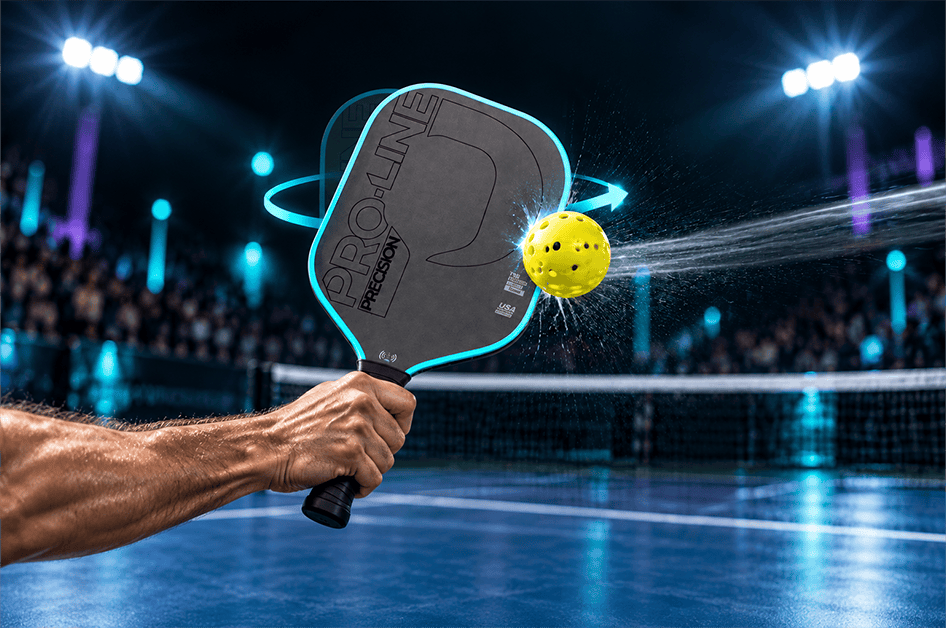
Your paddle should feel comfortable and support the shots you’re developing. Explore the Pro-Line paddle lineup as you consider the equipment that suits your game. Practice, decision-making and execution still do the work of turning those choices into results.

Keep Your Rating in Perspective

Use DUPR to find competitive games, follow your results and set realistic goals. Alongside it, keep noticing the improvements that make you more confident and adaptable on the court.

Next time you check your rating, think about what your recent matches have taught you. Then choose one part of your game to keep developing.

More About Your DUPR Rating

How do you get your first DUPR rating?

Create a DUPR account and submit match results through the app, or participate in an event where the organizer reports scores. Your recorded results help establish your rating, while additional matches give the system more information about your competitive level.

Is your singles rating different from your doubles rating?

Yes. DUPR tracks singles and doubles separately, so your numbers can differ. Each reflects your results in that format. Singles emphasizes individual court coverage, while doubles involves partner coordination, shared positioning and teamwork.

Can recreational matches count toward DUPR?

Yes. Recreational matches can contribute to your DUPR when their results are submitted through the platform. However, verified club, league and tournament matches carry more weight than self-posted results. Enter accurate scores so your match history reflects your actual performance.

Learn how your pickleball paddle should evolve from beginner to intermediate and competitive play, including changes in control, spin, power, balance and materials.

Learn how your pickleball paddle should evolve from beginner to intermediate and competitive play, including changes in control, spin, power, balance and materials.

Learn how your pickleball paddle should evolve from beginner to intermediate and competitive play, including changes in control, spin, power, balance and materials.

Does your DUPR reflect the way you’re playing right now? Share your experience in the comments, along with the skill you’re working on next.

Leave a Reply

Your email address will not be published. Required fields are marked *

Secret Link

Paddle Warranty Claim

Loading...

Loading...

Name(Required)
Address(Required)
Accepted file types: jpg, png, gif, Max. file size: 15 MB.
Please provide a photo of the damage.
Please describe the issues you are having with the paddle.

Paddle Status

Loading...

Loading...

Scan Activity